
What can I do to help?

Things you can do to help a friend who might be going through a tough time
Sometimes it’s hard to know what to do when a friend is having a tough time. Here are some simple tips to help you support them.
Tips for talking to your friend
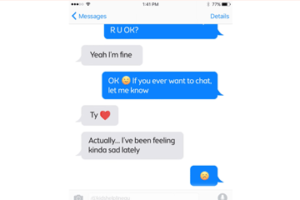
Here are some tips to help you start a conversation with a friend who might be having a tough time with their mental health or thinking about suicide.
These dos and don’ts can help you talk to them in a calm, caring and safe way.
Do’s
- Keep calm. Take a deep breath and speak gently.
- Let them know you care. You can say things like ‘I’m here for you’ or ‘I’ve noticed you don’t seem like yourself.’
- Check if they feel safe. Gently ask, ‘Are you feeling safe today?’ if you’re worried.
- Ask who supports them. ‘Is there someone you talk to when things feel hard?’
- Remind them there’s help. Let them know trusted adults and support services are there for them.
Dont’s
- Don’t blame them or make them feel wrong. Their feelings are real.
- Don’t dismiss what they’re going through. Avoid saying things like ‘You’ll be fine’ or ‘It’s not that bad.’
- Don’t turn it into an interrogation. Keep the chat gentle, short and kind.

How would you start the discussion with someone you’re worried about?
Ask. Listen. Get help. Check in.
By following these steps, you can be there for your friend and help them get the support they need.
Who are some trusted adults I can ask to help me?

If your friend asks you to keep it a secret
If your friend is showing signs that they might be thinking about suicide and asks you not to tell anyone, it’s important not to keep that secret.
When someone is feeling this overwhelmed, they might not realise they need help or that help is even available.
The best thing you can do is tell a trusted adult so your friend can get the support they need.
Your friend might feel upset or angry at first, but you’re doing the right thing to help keep them safe.

If your friend doesn’t want help
It’s normal for someone to say they don’t want help, even when they’re struggling.
Don’t pressure them, but try gentle steps like:
- Ask if they’re talking to anyone about what’s worrying them.
- If not, ask who they would feel okay talking to – maybe a teacher, coach, counsellor or family member.
They might just need support to take the first step.
Give them time – they might not be ready to talk yet. Let them know you care and that you can see they’re having a tough time. Remind them you’re here when they’re ready.
If you’re still worried, you can always talk to a trusted adult or report any concerning posts your friend has shared on social media to get extra support.


If your friend is refusing help, what should you do?



Was this page helpful?
Modal Content
Add groups below and assign an anchor link under “advanced” to create a modal. Link to it from a button and make the button style “modal”.
How would you start the discussion with someone you’re worried about? transcript
How would you start the discussion with someone you’re worried about?
So I’d first think about why am I worried and the warning signs that I have noticed, and I would approach that person, hopefully in a one-on-one or in an environment that they feel comfortable with and ask, ‘Is there anything you would like to talk to me about?’.
Just be direct and ask them, ‘Hey, how are you going? Are you okay?’ ‘How are you, like, how are you really feeling?’ ‘Have you got anyone that you talk to about that? Is there anyone that you confide in currently around that?’ ‘What has been happening for you? Let me know’.
So giving them that safe space to just speak. And just seeing if they wanted to go do something with you, like go to the movies or go to the beach or even just come hang out with you. Please feel free to ask are they suicidal.
Be direct, because you’re giving them the opportunity to tell you more to their story, but they might not feel comfortable to initially tell you because it can be a scary thing to do. But at least give them the opportunity to express themselves and tell you more. And that you never know that might actually allow you to have a deeper discussion and get them the help that they need.
Who are some trusted adults I can ask to help me? transcript
Who are some trusted adults you can ask to help you?
You’d know that someone is a trusted adult when they, you know, you share your feelings and they really, really listen. And they reassure you that you can get through it together. Stand by you. Someone you can go to take action, but also to make sure they’re listening to you and understand the situation.
For some people it can be their parents and if people don’t have that relationship with their parents or any of their family, you can have teachers. Someone’s parent. My boss, who’s like my mentor in a way.
Family friends or their babysitters. Or even lifeguards at the beach or life savers.
Counsellors. There’s lots of free counselling services available.
Trusted teachers, mainly my sports teachers and my coaches at sport.
For me, personally, they were the people that I felt knew enough about me and had the experience and the knowledge to help me deal with these things.
So looking at people who show up and hold comfortable space for you and that feel safe. Yeah. That’s what I’d look for.
If your friend is refusing help, what should you do? transcript
If your friend is refusing help, what should you do?
I think it’s important that you continue to lay out the options for them.
It’s important that you continue to try, give more avenues for them, lay out more options, more roads that they can go down.
Assure them that there is help for when they’re ready.
Just make sure that they know it’s there and always gonna be there and that you are gonna be there. Again, just letting them know that you’re always there for them. If it’s at a crisis point, talking to someone who you trust can always help.
Sometimes the best decision is to talk to a trusted adult. Reach out to a trusted adult. Make sure you go to a trusted adult or someone who can really take action. Talk to a trusted adult if your friend didn’t want help because it could get to the point where there they didn’t realise that they’re too far gone and they really need the help by someone professional.
So you could go to headspace. They’ve got lots of help there and they’re confidential. So your parents wouldn’t even need to find out about it. Or you could go onto Lifeline or Kids Helpline and they will also really help you. It’s just something that you have to do.
They may not appreciate it at that time, but they will appreciate it and thank it in the future.